News
YPIE participants write about ‘Why IP Matters’
Anti Copying in Design was once again delighted to be part of The Furniture Makers’ Company (FMC) Young Professional Industry Experience (YPIE) programme in 2025, with Dids Macdonald, co-founder and chairman, and Laura Newbold Breen, CEO, kicking off the first week with a talk and workshop on intellectual property (IP). Each year, we also run a competition setting an essay question: ‘Why IP Matters to my Brand/Business’.
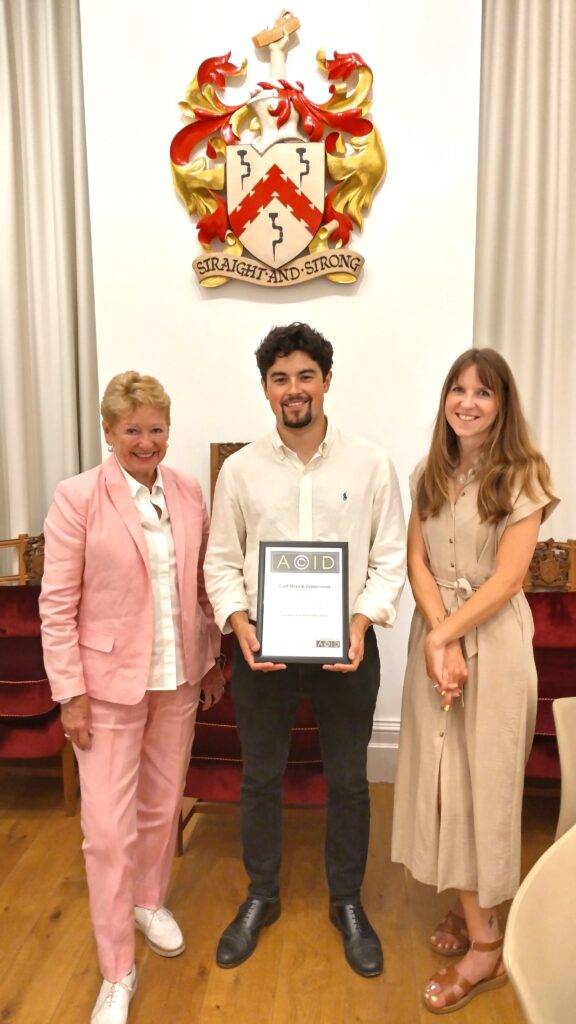
The importance of IP for future, sustainable innovation and full lifecycle design cannot be echoed enough. That’s why our winning piece had to go to Carl-Henrik Andersson, founder of Category Furniture – his own endeavour that ensures no piece of furniture ever goes to waste – with the design below:
IP refers to any copyrights, patents, trade marks, design rights or trade secrets owned by a company. IP is a key resource within a company’s business model. Throughout this text I will evaluate how IP matters to my own furniture brand, Category Furniture.
After registering my company name on Companies House, I took upon the challenge of personally designing my own brand. This included coming up with a logo, its own typography, a website and a domain. The design and development of each element involved researching and iterations to finally achieve an original, fresh and appealing brand identity, all of which required a significant amount of IP; by doing so I will further strengthen the brand identity to which consumers will be able to trust.
In continuation, IP does not only improve brand reputability, but it can also provide economic development. In the future, for example, if I design my own furniture or invent a new technology, registering these designs and ideas would potentially allow me to secure funding from investors once I am ready to further develop the business as a fully-fledged furniture brand.
Unfortunately, in the design world, it is common practice for other designers and manufacturers to copy popular designs. In the event of IP infringement, having my work registered with different forms of IP would ensure eligibility [GU1] to defend myself in court to prevent my work from being exploited. This is only possible so long as I have documented and registered my design process, allowing me peace of mind, knowing I have a strong legal standing, giving me a clear basis for legal action.
In conclusion, IP matters to my brand as it ensures I am rewarded for my hard work of creating a brand identity and new innovative solutions; regarding the prevention of furniture going to landfill, whilst also providing security in the event of infringement. However, with artificial intelligence (AI) now on the rise, this is having an impact on IP. Moving forward I will refrain from using AI for design or solution development, since there are many ongoing debates to figure out who owns the rights to the information inputted into these AI systems.
ACID is also delighted to welcome Carl as our first ever Sustainability Ambassador, supporting and advocating for IP respect throughout sustainable design and green skills.
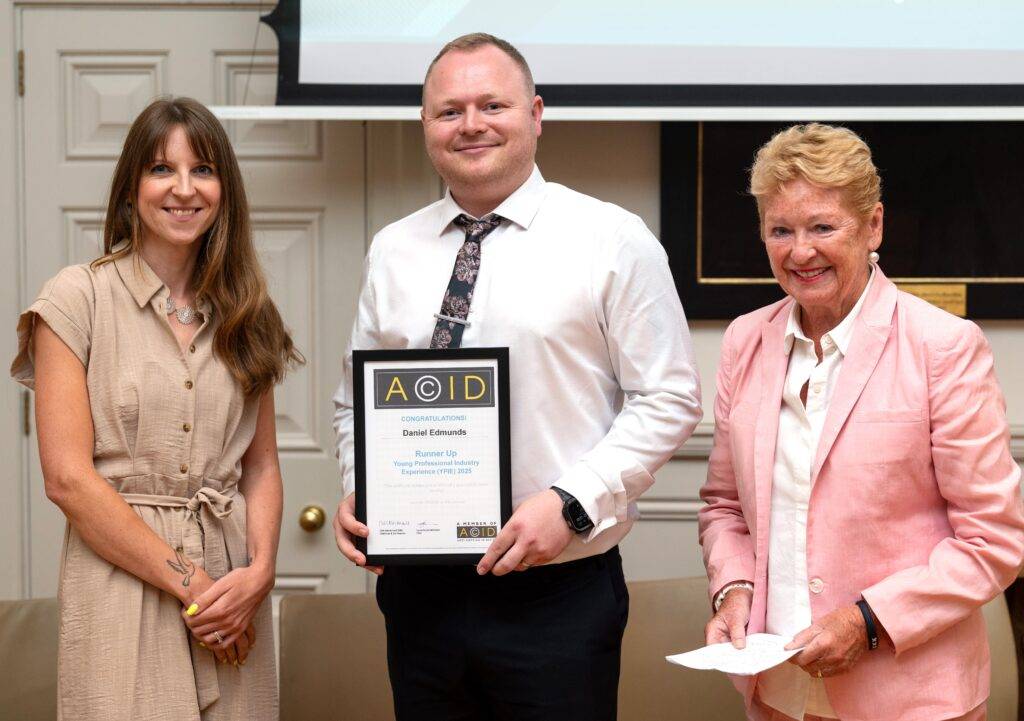
Daniel Edmunds from Dreams, was our worthy Runner Up, citing the importance of IP in both innovation and brand differentiation. Daniel’s words resonated with the ACID team in his essay:
IP is a critical asset for any business focused on innovation, brand strength and long-term growth. For Dreams Bed Company, the UK’s leading bed retailer, IP is not just a legal formality—it’s a strategic tool that underpins the company’s success. From exclusive mattress designs to digital innovations and powerful branding, Dreams relies on IP to protect its unique identity, products, and customer trust.
First and foremost, Dreams places significant emphasis on product design and innovation. The company offers a wide range of sleep products that are not only functional but also uniquely engineered. For example, the Dreams Sleepmatch technology, which helps customers find the perfect mattress based on body profile data, showcases the company’s commitment to combining science and comfort. Protecting such innovations through patents, design rights and trade secrets ensures that competitors cannot simply copy or replicate these advancements. This protection secures Dreams’ investment in research and development and helps maintain its market-leading position.
Equally important is the Dreams brand, which has become synonymous with comfort, quality, and expert sleep solutions. Over the years, Dreams has built a strong emotional connection with its customers. The brand name, logo, and marketing slogans – such as “Sleep matters” – are powerful differentiators in a crowded marketplace. By registering and enforcing trade marks, Dreams protects these brand elements from imitation or misuse, ensuring that customers always know they are purchasing authentic products from a trusted source.
Dreams also benefits from IP through its exclusive product ranges, including in-house brands and collaborations with top manufacturers. Many of these products feature unique aesthetics, materials, or construction methods that provide added value to consumers. Registering these features under design rights helps Dreams secure its competitive edge and prevents imitation by lower-cost or lower-quality competitors.
In recent years, the company has increasingly embraced digital innovation. From an intuitive e-commerce platform to in-store digital experiences and sleep improvement tools, technology is playing a larger role in how Dreams interacts with customers. The development of bespoke software, interactive tools, and data-driven services involves valuable IP in the form of source code, algorithms, and user interface design. Protecting this IP ensures that Dreams can continue to lead in digital retail experiences and enhances customer engagement both online and in-store.
Beyond protection, a robust IP strategy adds real commercial value. Whether in partnerships, investor discussions, or future expansion plans, a well-maintained IP portfolio demonstrates that Dreams is safeguarding its assets and thinking long-term. It increases the company’s appeal to stakeholders and confirms its position as an innovative and forward-thinking brand.
In conclusion, IP matters to Dreams because it underpins innovation, protects brand integrity, supports exclusive offerings, and enhances overall business value. By actively managing its IP, Dreams secures its reputation as a trusted industry leader while continuing to deliver high-quality, differentiated sleep solutions to customers across the UK.
ACID would like to congratulate everyone who took part in YPIE 2025 and wish them an extremely successful future; we’re sure you all have fantastic careers ahead of you!